The Kit Bag Smell Is Not a Cleaning Plan
A kit bag smell can linger after airing. Learn how to remove damp kit and debris, clean the lining safely and dry the bag before storing it.
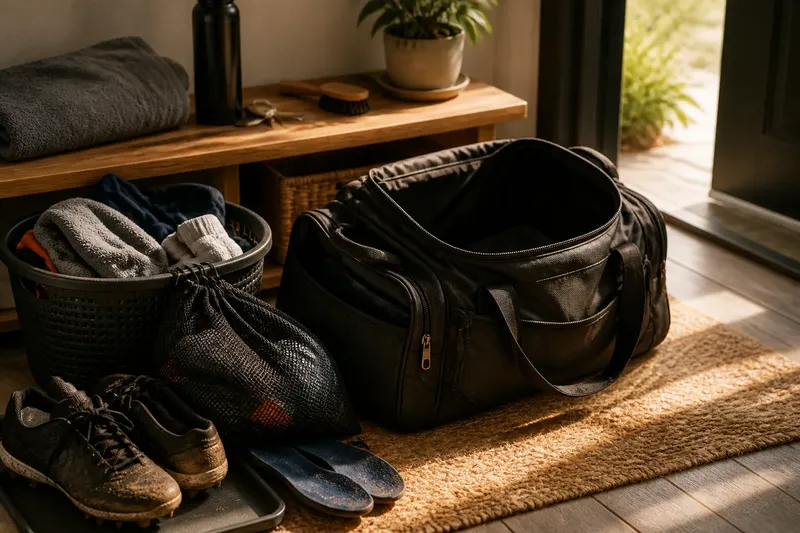
You drop your kit bag by the front door after training, unzip it, and leave it open while you make a cup of tea. By morning, the sharp smell has eased, but a damp towel and crumpled socks are still inside. A kit bag smell is a prompt to inspect the bag: airing alone cannot remove wet items or debris that keep it going.
Airing lets moisture escape; cleaning removes what has been left behind. A useful routine combines both: empty the bag, separate wet kit, clear the pockets, then dry the bag before putting it away.
Airing treats the bag, not everything inside it
Sports kit brings several kinds of residue home. Sweat leaves moisture and salts on clothing. Grass, court dust, mud and crumbs can collect in seams or pockets. A used towel or damp top can transfer moisture to the lining. Leaving the zip open may help the lining air, but it will not remove a towel folded beneath a shirt or grit trapped at the base.
The smell can return after airing if an item inside remains damp or a pocket still holds a used wristband or snack wrapper. Smell is not a reliable map of the source, so check each compartment rather than simply leaving the bag open longer.
Not every bag needs a deep wash after every session. Routine care is mostly about removing moisture sources and letting the inside dry. A deeper clean is a separate choice, guided by the care label and how dirty the bag has become.
Separate damp kit before it reaches the bag
Take out wet or moisture-holding items such as shirts, socks, shorts, towels and removable liners. Keep them apart from clean clothing. At home, a breathable laundry basket is useful; for the journey back, a washable mesh laundry sack can keep used kit together without sealing it tightly.
A waterproof wet bag can protect other belongings on a short trip, but it is not a drying method. Open it at home, remove the damp kit and let the container dry as well. Wet clothing sealed inside has little chance to air.
Remove wet boots or trainers so the shoe compartment does not retain their moisture. Take out loose insoles only if the footwear maker’s care advice allows it, and let them dry separately. Avoid a radiator or heated dryer unless the maker says that is suitable.
Say you return from practice with a damp top, socks, towel and muddy trainers. You put the clothing in a mesh laundry sack beside the washing basket, take the trainers out, and leave the empty kit bag open in a dry room. The expected result is observable: the bag no longer contains wet items, the laundry is easy to find, and the footwear can dry separately in a suitable place.
Empty every pocket, including the small ones
Once the bulky kit is out, check the main compartment and each pocket individually. Small pockets can hold a hair tie, tape, spare laces, a snack or a damp sweatband. Emptying them prevents forgotten items from staying in the bag between sessions.
Remove food wrappers and leftover food promptly. Brush loose dirt and crumbs into a bin, or use a soft brush for debris caught near seams. If you use a vacuum cleaner with a suitable attachment, choose a gentle setting and avoid pulling at loose stitching, mesh or delicate linings.
Check for personal items before cleaning. Coins, keys and small pieces of equipment can scratch a phone or tear a lining if left loose. Put reusable items in a designated place once the bag is empty.
Let the lining and openings dry before storage
With the bag empty, open its compartments as far as the design allows. Stand it upright or lay it open in a dry, ventilated place, away from direct heat. A shaded spot indoors is often more practical than a damp shed or a closed car. Keep the bag off a wet floor, and avoid strong sun if the material or colour could be affected.
Check the bottom corners, seams and padded areas, which can hold moisture after broad surfaces feel dry. Gently turn the bag so air reaches different parts. Leave removable dividers or liners out if they detach without force. Do not pull apart fixed panels or poke objects into seams.
Before storing the bag, check that the inside feels dry and that no damp kit remains in a side compartment. Close it only when dry, and choose a place with some airflow rather than a tightly packed cupboard beside wet clothing.
Clean the bag only as its material allows
For light dirt, a soft cloth and a small amount of mild soap in water may be enough. Wipe the surface, then use a clean damp cloth to remove residue. Use little water around foam padding, coated fabric, zips and stitched panels, and let the bag air-dry fully with compartments open.
Do not assume machine washing is suitable just because the bag fits in the drum. Washing can affect coatings, shape, padding or hardware. Follow the care label or manufacturer’s instructions to determine whether machine washing, particular cleaners or removable parts are suitable. If guidance is unavailable, start with a cautious surface clean rather than soaking the whole bag.
Strong fragrance is not the same as cleaning. Perfume or deodoriser may cover a smell without removing damp fabric or debris, and some products can leave residue. If you use a cleaner, follow its directions and let the bag dry before packing it. Never mix cleaning products.
What should you do when the smell remains?
Should you leave the bag open overnight?
It can help if the bag is empty and the room is dry with some airflow. If damp clothing or debris remains inside, remove those first; extra airing cannot replace emptying and drying the contents.
Can you put a kit bag in the washing machine?
Only if the care label or manufacturer’s instructions say machine washing is suitable. Some bags have coatings, padding or structured panels that may be affected, so a gentle surface clean is a more cautious starting point when guidance is unavailable.
What if the bag smells after it has dried?
Check the lining, pockets, shoe compartment and removable dividers for overlooked kit or residue. Clean the affected area in a way suited to the material, then let it dry fully. If the lining is damaged or the smell persists despite careful cleaning, ask the manufacturer about appropriate care.
Is a scented spray enough to freshen a kit bag?
A spray may change the smell temporarily, but it does not remove damp items, crumbs or dirt. Use one only if its directions and the bag material allow it, and do not treat it as a substitute for emptying and drying.
Use a repeatable routine after each session
When you get home, remove wet clothing and towels, take footwear out, empty every pocket, brush away loose debris, then leave the open bag somewhere dry with its compartments exposed. Store it only after the lining is dry.
- Check for wet clothing and towels; if you find any, remove them to a laundry basket or breathable sack, but if none are present, continue to the footwear check.
- Check the shoe compartment and footwear; if either is wet, take the footwear out and dry it as its maker advises, but if both are dry, leave the compartment open to air.
- Check every pocket for food, wrappers or damp small items; if you find any, remove them and bin the waste, but if the pockets are empty, move on to loose debris.
- Check the base and seams for crumbs or grit; if you find debris, brush it out with a soft brush, but if they are clear, avoid unnecessary scrubbing.
- Check the care label before using water or cleaner; if it permits the chosen method, follow its directions, but if guidance is missing or unclear, use a cautious surface clean or ask the manufacturer.
- Check the lining, corners and removable parts before storage; if any area still feels damp, leave the bag open in a ventilated place, but if it is dry, store it away from wet kit.
Mesh laundry sacks, separate shoe bags and small pouches for tape or spare laces can make the routine easier. Empty and dry those organisers too; a damp pouch simply shifts the same problem to another layer.
The next time a kit bag smell draws your attention, inspect rather than mask it. Remove moisture sources, clear the small spaces and give the empty bag time to dry. For a kit bag smell that persists despite careful cleaning, check the maker’s care advice before trying a stronger product or wash.