Why Ball Seams Change the Feel of a Kick
Why ball seams change the feel of a kick depends on sport, contact and construction; learn what to inspect before choosing a ball for your game.

A football rolls from the grass onto a hard training surface, and its next touch feels different under the boot. The seam is one detail worth inspecting: why ball seams change the feel of a kick comes down to how panels meet, how raised or recessed those joins are, and where the foot or another surface makes contact.
Seams do not act alone. Cover material, panel shape, inflation and the ball’s intended sport all contribute to its response. The useful question is not whether a ball has seams, but whether its construction suits the way you kick, pass or strike it. A stitched join may give a different surface from a bonded one, while the same seam can matter more for one kind of contact than another.
Start with the contact your sport asks for
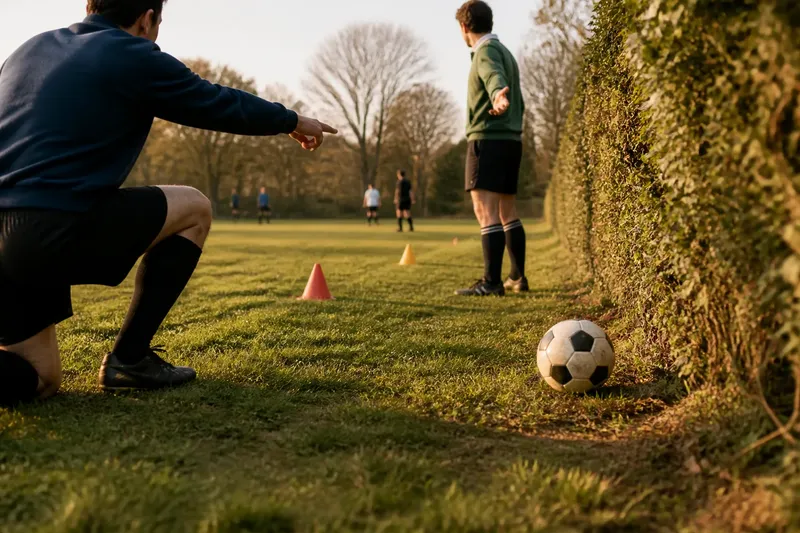
A kick can mean a driven football pass, a rugby punt, a football place-kick or a strike in another game. Those actions meet the ball in different ways. A football boot may brush across a broad panel, while a rugby kick can make contact along a narrower part of the ball’s curved surface. Seam location therefore matters in relation to the action, not as an abstract design feature.
For a game with frequent foot passing, look at how the seams sit beneath the usual striking areas. If the join is prominent where the instep commonly meets the ball, it may be more noticeable on contact than a smoother panel. For a ball often kicked from a tee or held for a punt, inspect the areas that meet the boot in those actions instead. The aim is to judge the actual contact zones, not simply count panels.
In sports where the hands are the main means of control, a seam may matter more to grip and release than to a kick. A cricket ball, for example, is designed around its seam as a defining surface feature, but it is not interchangeable with a football or rugby ball. Compare balls only within the demands of their sport; a seam that is useful for one action may be irrelevant or unsuitable in another.
Choose by seam construction and surface feel
Stitched, bonded and moulded constructions describe different ways of joining or forming a ball’s outer panels. In stitched designs, thread holds panels together and the seam may be raised or otherwise distinct. Bonded panels are joined without visible thread, and moulded designs form the surface as part of a shaped outer layer. These broad terms do not tell you everything: seam depth, panel edges and the cover finish vary between products.
Run a hand over the surface and look closely at the joins. A smooth transition may feel less pronounced beneath a boot, while a ridge can be easy to locate by touch. Neither feature alone tells you how the ball will behave in every kick. The cover’s grip, the panel’s shape and the ball’s inflation influence the contact too, so treat the seam as one part of a complete surface.
If you prefer a clear tactile reference for controlling or placing a kick, a defined seam may be useful to assess. If your priority is a more even-feeling striking surface, a less prominent join may suit your preference. These are starting points rather than rules: players differ in technique, and equipment made for one sport may have required features that take priority over a preferred feel.
Match the ball to your situation
Which seam suits regular football passing?
For a player who passes and shoots with the foot throughout a session, choose a football whose cover feels consistent across the usual contact areas. Check whether any raised joins cross the instep’s likely striking zone, then try ordinary passes if the ball is available for a supervised trial. A less noticeable seam may appeal if you want a more uniform touch, but make the decision alongside the ball’s sport-specific construction and handling.
What should I look for in a rugby ball?
For rugby, begin with a ball made for the relevant form of the game and inspect how its surface feels during a pass, catch and kick. The seam and panel layout can influence where the fingers find purchase as well as how a kick feels on contact. Consider the actions you perform most often; a feature that helps your grip may be more valuable than a perfectly uniform kicking surface.
Does a smoother seam suit a beginner?
A beginner may find a consistent surface comfortable, but learning to control the ball matters more than choosing a particular seam style. Select equipment appropriate to the sport and the player’s level, then pay attention to whether the surface feels manageable during basic passes and kicks. A seam that is easy to notice can also offer a useful tactile reference, so there is no universal beginner preference.
Should I choose one ball for several sports?
Usually, choose a ball designed for the sport you will play most. Different sports specify distinct shapes, surface properties and handling expectations, so a ball that seems convenient across activities may not provide the intended feel in either one. If the ball must serve more than one informal purpose, decide which activity matters most and accept that the compromise may be noticeable.
Use a short trial to judge the feel
When a shop, club or facility permits a trial, use the same small set of actions for each ball: a gentle pass, a firmer pass and a controlled strike. Notice whether a seam catches your attention at contact, whether the ball leaves the foot as expected, and whether the surface feels consistent when you turn the ball to a different panel. Keep the actions familiar; changing technique between attempts makes comparisons harder to interpret.
Say you are choosing a football for a local training group that practises short passing on a firm indoor floor. You compare two suitable balls by passing each with the same instep action and notice that one has a join more apparent beneath the boot. If the group values a uniform touch, the other ball may be the better fit; if players prefer the tactile reference of that join, the first may suit them. This invented situation illustrates a preference decision, not a prediction that every player will feel the same difference.
Do not judge a seam from a single hard strike. A high-impact kick can make cover firmness, inflation and technique more noticeable than the join itself. Check the ball’s pressure and handling guidance, and use comparable conditions if you are trying alternatives. Where the right choice depends on a label, manufacturer instructions or local rules, follow those requirements rather than relying on seam feel alone.
Inspect the seams as the ball wears
A seam can change in feel as a ball is used. Thread may become more exposed, a bonded edge may lift, or a panel may lose its smooth transition. These changes can affect contact and may also signal that the ball needs attention or replacement. Look over the full surface rather than checking only the panel that usually faces upwards.
After play, wipe dirt away with a cloth suited to the cover and let the ball dry as its care instructions direct. Avoid pulling at a loose seam or applying an adhesive without checking the manufacturer’s guidance; an improvised repair can change the surface or compromise the ball. If a join has opened, the ball is misshapen, or it no longer holds its intended pressure, remove it from play until it has been assessed or replaced.
Use the sport and your usual contact as the final filter when considering why ball seams change the feel of a kick. A seam’s height and position can make the surface more or less noticeable, but the right fit depends on the ball’s intended use, the actions you perform and the feel you prefer. Inspect the construction, try familiar movements where possible, and choose a ball that suits the game rather than searching for one seam design to suit them all.