Wool, Cotton or Synthetic: What Changes in a Sports Sock?
Compare wool, cotton and synthetic sports socks by feel, moisture handling and care, then choose a pair that suits your activity and laundry routine.
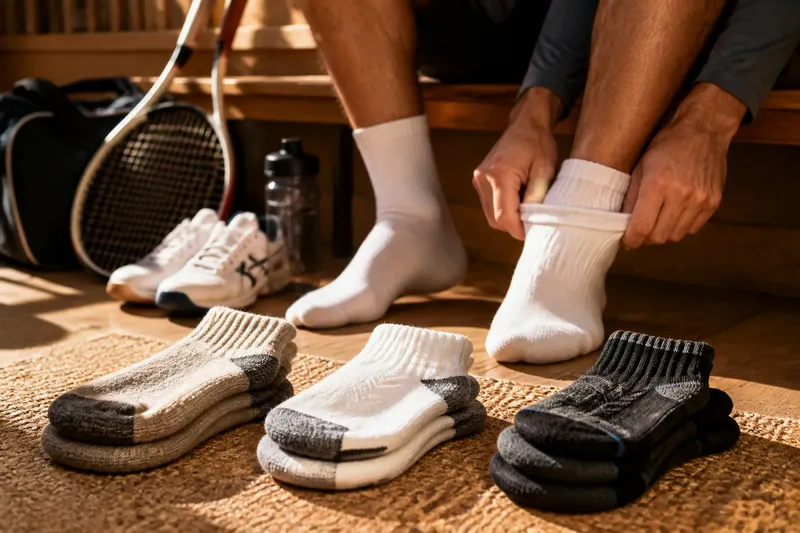
You pull on a clean pair of sports socks before heading out: one feels soft and familiar, another springy, a third warm and cushioned. Choosing sports socks by material means weighing those sensations against how each fabric handles moisture and washing. Wool, cotton and synthetic fibres behave differently, while blends combine some of their qualities.
Fibre choice changes the feel against your foot
“Feel” includes more than softness. A sock can seem smooth or textured, cool or warm, close-fitting or bulky. Its knit, thickness, stretch fibres and construction also matter, so the fibre name alone cannot tell you exactly how it will feel. Material is still a useful starting point when comparing labels.
Wool fibres have a naturally crimped structure, which can make a sock feel springy and warm. Merino wool, often used in sports socks, is finer than many traditional wool fibres and is commonly chosen for a softer feel. Some people enjoy its gentle cushioning; others prefer the smooth sensation of a thin synthetic knit.
Cotton tends to feel soft and familiar, with a substantial hand in many everyday socks. A cotton-rich pair may suit someone who likes a natural-feeling fabric and a relaxed fit. Synthetic fibres such as polyester and nylon are often knitted into smooth, light fabrics. Elastane, also called spandex or Lycra, may be added to help a sock stretch and stay in place.
Moisture handling depends on fibre and construction
Feet release moisture during activity. A sock does more than absorb it: the fabric can spread moisture through the knit or help it move away from the skin and dry. Fibre type, yarn, knit density and fit inside the shoe all affect that process.
Cotton absorbs moisture readily. That can contribute to a soft, comfortable feel during gentle or short activity, but a wet cotton sock may feel heavier or cling to the foot. On a longer outing or during a session that leaves your feet damp, that sensation may be unwelcome.
Wool can absorb moisture within its fibres while still feeling relatively comfortable against the skin. Its warmth may appeal in cool conditions, though a thick wool sock can feel too warm in a snug shoe. Synthetic fibres generally absorb less moisture into the fibre itself; many sports socks use yarns and knit structures intended to move moisture through the fabric. The result depends on the particular sock, not just on a label that says “synthetic”.
Fit can undo the advantage of a suitable fibre. A sock that bunches may rub; one that is too tight can feel constricting, while a loose one may shift inside the shoe. Judge a sock with the footwear you intend to wear, paying attention to pressure around the toes, heel and ankle.
Care needs differ between wool, cotton and synthetics
Washing habits affect how a sports sock feels over time. Cotton socks are usually straightforward to care for, but repeated washing and drying can change their shape and softness. Synthetic socks often dry readily, though heat can affect elastic components or finishes. Wool may call for a gentler wash and careful drying to help it retain its shape and texture.
Check the care label before choosing a washing method. Fibre blends can have different requirements, and the manufacturer’s instructions take precedence over broad rules. If you prefer to wash all your sports kit on one familiar cycle, a sock with care needs that fit that routine may be more convenient.
To compare construction as well as material, hold two pairs of similar thickness and stretch each gently, then see how readily they return to shape. Feel the inside surface and look for areas of extra padding or mesh. These observations help distinguish a fibre preference from differences in knitting and construction.
Choose a sports sock for the conditions you expect
The best match depends on your activity, footwear, climate and personal preference. A runner in warm weather may value a light, smooth sock that sits securely in the shoe. Someone walking outdoors in cool conditions may prefer the warmth and cushioning of wool. For a relaxed indoor session, a soft cotton-rich pair may feel right.
Say you play recreational tennis in a warm indoor hall and dislike a damp, heavy feeling after moving around. You start with two pairs of similar thickness and fit: one synthetic blend and one cotton-rich pair. Wear each with the same court shoes during comparable sessions, then note whether either pair feels clammy, shifts or creates pressure. If the synthetic pair feels less clammy and stays smooth, it better matches your stated preference; if the cotton pair feels more comfortable and the sessions are short, that may be the more suitable trade-off for you.
- Soft, familiar feel: Check whether the cotton-rich pair feels comfortable against your skin; if it does and your activity is light, choose it, but if dampness becomes uncomfortable, compare a wool or synthetic option.
- Warmth and cushioning: Check whether wool feels warm without crowding your footwear; if it does, choose a wool or wool-blend pair, but if it feels too hot or tight, try a thinner knit or another fibre.
- Light, close fit: Check for shifting, pressure and rubbing inside your actual footwear; if the synthetic blend stays smooth and comfortable, choose it, but if it pinches or bunches, try a different size or construction.
- Simple laundry routine: Check the care label against your usual wash and drying method; if the instructions fit, choose that pair, but if they require a routine you will not follow, select one with compatible care needs.
- Mixed conditions: Check the fibre content and care label of a blend, then assess its warmth and feel; if it suits both your activity and routine, choose it, but if one quality is lacking, compare a pair with a different fibre balance.
- Extra padding or mesh: Check where these features sit and whether they alter the fit in your shoe; if they ease pressure without making the sock feel bulky, choose that construction, but if they crowd your toes or shift, try a simpler knit.
What should you know before choosing sports socks?
Are wool socks too warm for sport?
Not necessarily: a thin wool or wool-blend sock may feel comfortable where a thick knit would feel warm. Check its weight and fit in your footwear, because construction matters alongside fibre.
Are cotton socks suitable for exercise?
They can suit gentle activity or anyone who prefers their soft, familiar feel. If your feet tend to become damp during longer sessions, compare a cotton-rich pair with a lighter wool or synthetic option.
Do synthetic socks always keep feet dry?
No fibre can promise that, and a synthetic label does not describe the whole fabric. Knit design, sock fit, footwear and conditions all influence how moisture feels against your feet.
Are blended sports socks a sensible choice?
They can combine qualities such as wool’s warmth, cotton’s familiar softness or synthetic fibres’ stretch. Read the fibre content and care label, then judge the finished sock by its feel and fit.
Let comfort and care settle the decision
No single sports sock material suits every foot or activity. Start with the sensation you prefer, consider how warmth and dampness affect your sessions, and check that the care instructions fit your routine. When comparing wool, cotton and synthetic sports socks, choose pairs of similar thickness and try them with your usual footwear; that makes material easier to judge without overlooking fit or knit.